




23 February, 2026

A quick little google search for culture shock in Japan is likely to return endless lists that are the equivalent of literary junk food. It’s so clean! There are vending machines everywhere! The train is always on time!
And while these are honest (and entertaining) responses to life in Japan, they fall a bit short when it comes to actually preparing those who intend to uproot their lives and fully move.
Moving to Japan is not a light decision. It will likely involve some level of sacrifice. Leaving family, friends, and a career is just the start. This can add to the personal pressures we place on ourselves to make it – get along well in your new home. You gave up a lot to do it.
The reality is that when things get tough, the problems can be difficult, or even impossible to resolve. Eastern and Western perspectives are different, and there will be times when cultures seem to be head-to-head at odds with each other.
This is all compounded by the communication barrier, lack of personal social safety net, prejudice, isolation, employment challenges and more.
So here is a deeper take on what it means to not just survive, but thrive despite culture shock.
You might come across textbook explanations that break down culture shock into phases like the honeymoon phase, frustration, adjustment and acceptance. This might be a helpful reference for some, as it emphasizes that the challenges and negative feelings are both normal and to some degree, temporary.
Some will refer to culturally contrasting norms as “culture shocks.” And while it can be fun, interesting and to some extent, eye-opening to recount these contrasts, it’s a bit of a pet peeve of mine to use the term for these light-weight experiences. Because culture shock for Western people in Japan can be a much heavier burden on mental health.
The word “stress” describes both mental/emotional strain and physical strain, like the weight a bridge carries. Similarly, culture shock is a type of stress that affects us emotionally and feels like a weight we carry.
Despite social progress in the way we think about mental health, we often consider these topics unfairly. By viewing culture shock as an external load, it becomes easier to treat ourselves with kindness, understanding, and a bit more tenderness.
Remember. The experience of culture shock is not a result of a personal insufficiency. It is a heavy load that you picked up, and it will take a while to build the strength to carry it more easily.
It is completely normal to feel more tired than usual, less productive, more foggy, slower, less useful, etc. Just remember. You are carrying this heavy invisible thing, and those are normal responses.
Even for those who’ve studied Japanese language for years, you may arrive in Japan and realize that you lack the ability to navigate the world independently.
Taxes, pension system, car registration, local government regulations all come to mind as difficult tasks, especially for someone used to how things work in another country.
What often ends up happening is that new foreign residents simply can’t be as efficient and productive as they were in their home countries.
Looking to learn a new language, start a business, renovate a house and start a family? Simply acclimating to a foreign country is enough to take on by itself. So consider how you can lighten the load, or anticipate that your goals will take longer than expected to achieve.
Make a plan and prep for it! For basic wellness practices, block out the time for self-care on your personal calendar.
Additionally, it can be just as important to make a plan for what to do when things get difficult. These tactics will depend on how you tend to react to stressors – do you get discouraged, angry, or tired? It can be helpful to note well in advance, before you become overwhelmed, what your personal recovery (and maintenance!) plan will look like.
When you land in a foreign country and everything is different, it can be easy to lose track of your personal self-care strategies, especially the “for emergency only” ones.
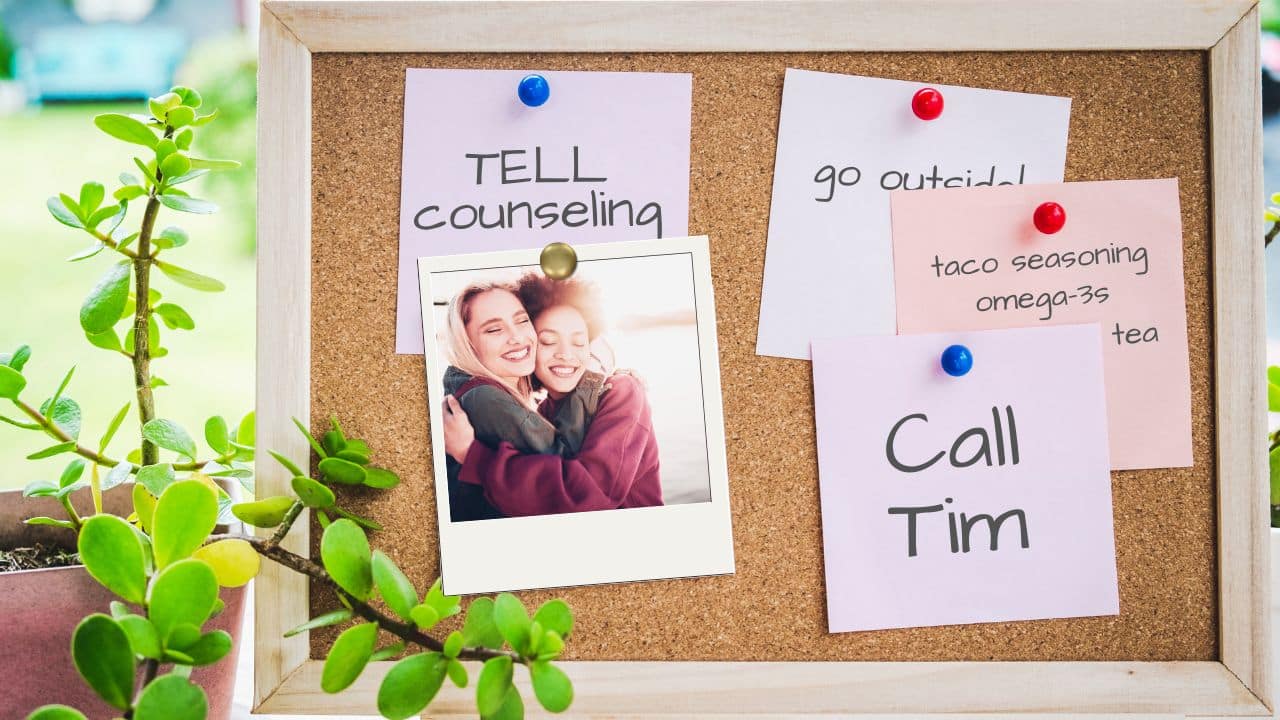
Self-soothing is the process to “reset bodily systems after an acute stress response and regain homeostasis.” [source: positivepsychology.com] As many of us have learned to reach out to a friend to talk through problems or blow off steam, learning how to process stress independently is an extremely useful skill.
Time zone differences will make it much harder to connect with loved ones, and you may find that cultural perspectives make it difficult to relate to new local friends (if you are lucky enough to make some).
We all have self-soothing urges in one way or another, but our personal tendencies can vary greatly and some habits are healthier than others.
For example, one person’s default action after a stressful day may be to open a bottle of wine, whereas another person’s response may be to go for a run. Some of our urges are healthier (and more effective) than others.
The best ways to achieve self-soothing are healthy, easy, and the ones you will actually do. Here are some starter ideas for your self-soothing toolbox:
According to one Japanese media publisher, “Compared to the rest of the world, there are few people in Japan who have cheerfulness and hope.”
The article, titled “Cautious Rather Than Negative,” goes on to say that Japanese people are genetically predisposed to be more pessimistic, and Japanese culture has evolved to prioritize concern and preparation over personal comfort and well-being.
I once witnessed the physical repercussions of work-related stress affect a neighbor. I was concerned about the 24-year-old, who was losing sleep and had developed an ulcer. Upon hearing about his ailments, I commented, “That’s really too bad. His health is more important than work. I hope he can relax more and get less stressed.” But the Japanese person I was speaking with snapped back that stress is a useful emotion in order to avoid crisis, get things done, and do a good job.
Sure, you’ve probably heard that Japan is not the highest-ranking country for happiness. And the truth is, at the end of the day, personal happiness is sometimes seen as a bit too self-indulgent. It’s not as high a priority as in other parts of the world. The Japanese perspective on this is not necessarily bad; it’s just different.
But as a result, a Western person acclimating to this new, more pessimistic social environment may simply find things to be a bit of a bummer at times. Assimilating into the pessimism without the backing social supports that make it “work” for Japanese can be a wreck of a situation for a foreign person.
Your Japanese community will likely not prioritize your happiness (unless you are viewed as a temporary guest, in which case the Japanese value of hospitality will kick in). This is all to say, you’ve got to look out for your own happiness. Find friends who value happiness. Do the things that make you happy. No one else will do this for you.
Hi! Are you planning your move to Japan? It’s stressful and confusing!
That’s why we made Japan Remotely Academy.
It’s years of hard-learned lessons, condensed into an easy-to-follow library of resources: how to get better jobs, find the best places to live, find foreigner-friendly housing and employment, and more! So you can move to Japan the best way for you (and the best way for Japan!) the first time around!
A great tip is to plan positives onto your schedule. Even something small like solo coffee and a stroll in the park can mean double the joy when you schedule it. You can enjoy the anticipation of the pleasant activity, as well as the day-of.
We’ve all heard plenty of times that nutrition, hydration, exercise, and restorative sleep are useful for maintaining a balanced outlook.
So make a point of taking the time to schedule and plan for all of these points. Maybe that means setting an alarm on your phone every day to remind you to begin a nighttime routine. Prepping for basic physical needs may seem like an unnecessary step (after all, you’ve lived life this long and maybe it’s been a non-issue thus far).
But when in Japan, you may find yourself working harder, longer, drinking more alcohol, defending from high heat and humidity, lacking access to your go-to foods, and overall, managing additional environmental stressors. So you not only is it more difficult, but it’s more critical that these factors receive preventative wellness care.
⭐Pro tip: Japanese summers are hot and humid. In humidity, bodies can’t self cool as effectively, and we become more susceptible to heat stroke. Drink enough water, avoid tight clothing, eat breakfast, use a fan and take it easy! Heat stroke is no joke.
Professional and peer counseling is invaluable. But your home therapist may be unable to practice outside of their territory of licensure, and it may be a wise idea to find someone who understands cross-cultural nuances more intimately.
The one things I will warn is that it is extremely difficult to find experienced, licensed therapists and counselors who have deep cross-cultural fluency. If you try to explain culturally challenging situations to someone with only Western or Japanese understanding, you may find yourself trying to explain things endlessly, and the advice is likely to be lacking.
The following story is shared with permission. An American friend of mine (a JET at the time) reached out to her program-provided counselors to just get in touch.
With a history of mental health challenges, she just wanted to get connected and have someone know her before it was an emergency situation. There were no pressing issues – it was just an introduction outreach. She explained that she took medication for depression, was stressed in the US, and had not been in contact with her father for many years, though this was not something that bothered her.
The [Japanese] counselor responded, telling her that fathers give women social skills and a purpose for living. So it was natural that she was aimlessly trying to run away from her problems.
This was advice given by a qualified therapist with “overseas experience.”
The one thing we can learn from this is that it’s a good idea to have some resources on file that have been reviewed in advance.
TELL “is a not-for-profit organization dedicated to providing world-class, effective support and counseling services to Japan’s international community as well as helping to address the country’s growing mental health care needs.” Their website is not only good for connecting with emergency assistance, but has an abundance of resources available.
IMHPJ (International Mental Health Professionals Japan) has a directory of therapists and counselors from a variety of cultural backgrounds. You can read biographies and statements to find a statement that resonates with you.
Living in Japan as a foreigner can sometimes feel like an up-hill battle. Language, cultural perspective, and prejudice can all take a major toll on self-esteem. Once independent people can find that they can’t do even simple everyday tasks alone, let alone express their highest potential in work, community or home life.

This makes it even more important to have some kind of activity you do that is not dependent on your Japan life. Something where you can sail and be free to do well, without language, cultural or other barriers. Achieving goals, even if they are small and personal, can help maintain spirit and self-confidence.
Having people to talk to locally (or at least in the same time zone) is a huge help.
Everyone who seriously quarantined during the pandemic likely understands the importance of social networks, and how difficult things can get when we don’t have them. So start building relationships as soon as you can, and be sure to also include other people who have a similar background to you, with whom you can relate with and find common ground.
If you are deep in a rural area and/or working remotely, this will be a bit harder but still possible. Be present online through social media, forums, digital meetups, and don’t be afraid to send a cold email introduction every once in a while. Online connections can turn into real-life friendships.
As they say, absence makes the heart grow fonder! Japan can be… a lot to deal with. Visiting another country, even for a short trip, can remind you why you fell in love with Japan in the first place.
For example, I went to South Korea for a week and had a blast! I love Korean food! At the end of the week though, my body was ready to go back to more mild Japanese dishes. Besides South Korea, there are other nearby destinations in Asia that are easily accessible from Japan. Hop on a low cost airline and take a break for a while!
And when the going gets tough, remember what your goal was before you came to Japan. For a lot of people, the goal stopped the moment of receiving a residence card. Moved to Japan: check. Goal achieved. Everything after there is just icing on the cake.
So look at all the things you’ve achieved that you’ve already normalized and take a minute to appreciate how far you’ve come.
And if your goal is more specific than just to move, keep your eyes on the prize and don’t let the other stuff bring you down.
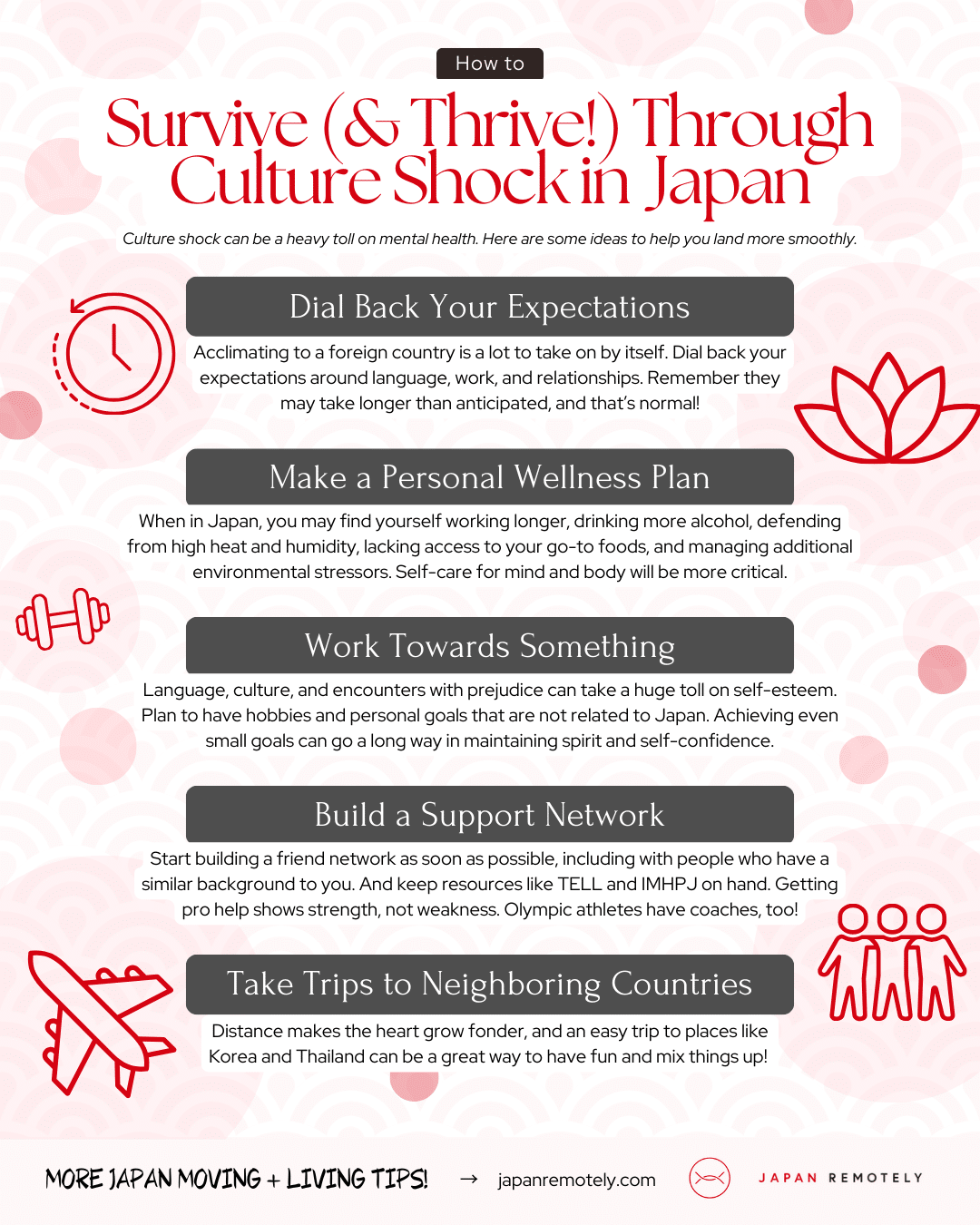
Doing well through culture shock requires more than just an appreciation for Japan’s specialized culture. It demands a solid strategy that includes adjusting expectations, self-care planning, and finding support.
By viewing culture shock as an external load rather than a personal insufficiency, it becomes easier to treat oneself with kindness and understanding.
Remember to dial back expectations and prioritize happiness to maintain mental and emotional well-being.
Above all, don’t forget the progress you’ve made, celebrating incremental successes along the way. Thriving in Japan is about finding balance, resilience, and joy in your new environment.
Need a sounding board to help with your Japan immigration strategy? We’ve got your back!
👋 Hi! I’m Nick, an experienced Immigration and Moving Consultant at Japan Remotely. We help navigate visa types, Japan real estate, location scouting, career opportunities in Japan, business strategy, and more. We help you create a realistic Action Plan and Visa Strategy, so you can find your fastest track to permanent residency and the lifestyle you’ve been dreaming of.
Interested to learn more? Talk to us! We are happy to discuss a custom strategy.

23 February, 2026

10 November, 2025

19 September, 2025