


23 February, 2026


Moving to Japan is a completely realistic way to hack your way into FIRE for some people. Keyword: some. But to be honest, we are kind of surprised why more people aren’t considering Japan as a way to super-charge their FIRE strategy.
F.I.R.E. (Financial Independence / Retire Early) refers to a financial planning strategy. The idea behind the movement is for people from many different income brackets to save aggressively, allowing them to have more flexibility before the traditional retirement age of 65.
But one of the key aspects about FIRE isn’t the money – it’s the lifestyle freedom. By front-loading one’s saving capacity and taking advantage of compound interest, people can make the most of their earnings.
And many stories have popped up of people hitting their FI (financial independence) savings goal number at age 40, 30, and even in their twenties.
When visualizing the lifestyle of this particular kind of financial freedom, the following characteristics come to mind:
FIRE is all about flexibility. It’s an alternative lifestyle decision to travel, live, pursue hobbies, etc. before the traditional retirement age of 65. It’s about your vision – how you choose to spend your time and money.
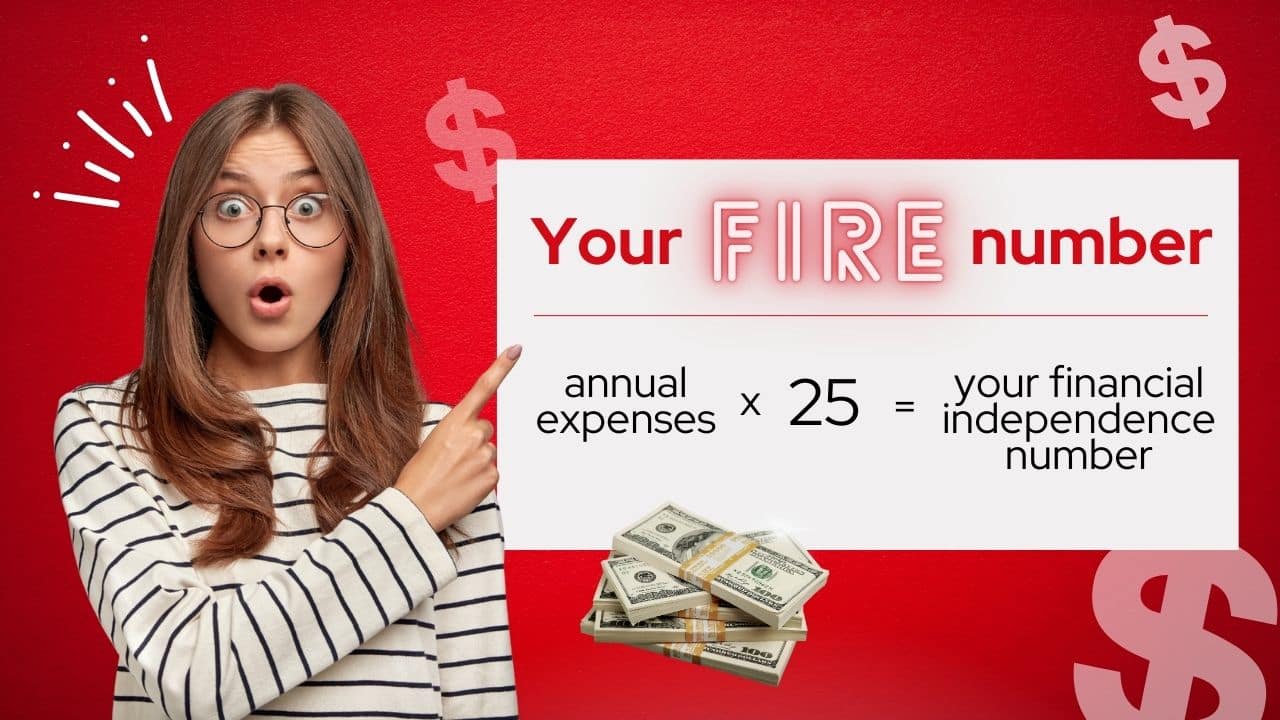
The basic workings behind FIRE rely not only on saving but also on investing.
The most simple way to understand the concept is this:
Once you have enough money saved up and in an investment account, you can anticipate that if you only withdraw 4% from investments, you will not run out of money during retirement.
*This is a great time to mention that we are not financial advisors, this is an oversimplification, and you should work with a professional financial advisor before making changes to your financial strategy.
This theory was developed in 1994 by William Benger, who developed this “safe withdrawal rate” while considering times of financial crisis including the Great Depression. [source]
This does factor in inflation but does not factor in passive income sources or changing lifestyle needs later in life. There are endless calculators, worksheets, and tutorials online that can be found with a quick google search.
But there is power in clarity. Let’s take a look at an example:
Desired annual expense rate during retirement: $40,000
X 25
= $1,000,000 FI number
Does this mean that you need to work until saving up $1 million? No! Because if you put savings into an investment account, this will allow the amount to grow due to compound interest.
The following variables can be tweaked to create a FIRE strategy to your liking:
The following variables will also influence planning:
Hi! Are you planning your move to Japan? It’s stressful and confusing!
That’s why we made Japan Remotely Academy.
It’s years of hard-learned lessons, condensed into an easy-to-follow library of resources: how to get better jobs, find the best places to live, find foreigner-friendly housing and employment, and more! So you can move to Japan the best way for you (and the best way for Japan!) the first time around!
Some people aspire to live a quiet, modest lifestyle anchored in security. Others have more high-end luxury aspirations. There is no one-size-fits-all. As a result, here are some sub-categories of FIRE:
This approach is popular with younger crowds and relies on low annual expenses of $25k to $40k, with a FI number between $625k to $1 million. The goal is to live a more minimal and frugal lifestyle.
This approach is partial financial independence, with a FI number between $500k and $1 million. Instead of fully quitting once the FI number is reached, the earner takes an easy or low-pay/high-meaning job after substantial savings have accrued. This allows the savings to compound without taking withdrawals until later.
Coast FIRE is when an earner plans for a traditional age of retirement. But once they have reached their FI goal number, they can decide to work with flexibility to fund only their immediate expenses and no additional investment contributions. Their investment sum will be ready and waiting at the time of retirement.
This approach is for high net worth and high earning people, earning $100k+ annually. This FI number will be several million, with the earner seeking to live the same or higher quality of living post-retirement.
Chubby FIRE is a middle-ground between Fat FIRE and more modest versions, with a FI number somewhere between $2.5 million and $5 million.
The strategy behind FIRE is to save/invest as much as possible, as soon as possible. This generally means you either need to earn more or spend less. Here’s where Japan comes in.
By living in Japan, you can radically reduce cost of living. Between the weak yen, wildly affordable housing, and minimalist lifestyle opportunities, Japan lifestyle can be the ticket to spending less while still maintaining a great quality of life.
For anyone luck enough to be sitting on homeownership equity, why not trade it in and pay cash for a cheap house in Japan? That could be enough to fund the FI savings goal for Barista FIRE, and work an easy English-teaching job until retirement. Enjoy affordable off-season domestic tourism with less crowds.
One Lean FIRE stereotype is when young tech workers earning six figures in California live in vans or dorm-style housing to save on rent. Why not go remote, earn well, and keep living costs low by moving into more affordable housing in a non-major Japanese city? Not only will housing costs be low, but so will food, transport, and entertainment.
And particularly for those interested in countryside living, you will benefit from Japanese cultural influence. In rural areas, this often means a distaste for luxury, and living by modest means. And while this won’t be for everyone, the lack of amenities for shopping, entertainment, and eating out in depopulating areas may help you to reduce spending. 😀
@rachel_talksmoney Replying to @lauzenpopsy thanks for asking! I hope this makes sense! #firejourney #investing101 #financialliteracy #introtoinvesting #financialindependenceretireearly #financialfreedom #financialindependence #financialeducation #financialfreedomforwomen #moneycoach #moneycoachforwomen #earlyretirement #earlyretirementsquad #investearlyandoften ♬ original sound – Rachel | Money & Finance Coach
Moving to Japan is not a great way to achieve FIRE unless you already wanted to move to Japan anyway. 😉 For those already interested in Japan, the FIRE opportunities will just be an added benefit.
Even for those fluent in Japanese, technical jargon and foreign processes can seem nearly impossible. Budget to hire a bilingual Japanese accountant to make sure you are abiding by the laws and tax requirements properly.
While health coverage in Japan is very accessible, it is not free. The cost for premiums with depend on your age and location, but there are some databases online where you can look up the rates, factoring rates such as age, location and size of household.
If you plan to reside in Japan part-time, you might want to also budget in international travel and if applicable, house maintenance services while you are away (to cut weeds, collect mail, and air out the house to prevent mold).
If you plan to work in Japan, anticipate earning less. Not only are salaries generally low in Japan, but international people often face additional hurdles getting considered and hired domestically. Staying in Japan and working remotely may mean having fewer options available, or facing more competition for 100% remote job seekers around the globe.

Need a sounding board to help with your Japan immigration strategy? We’ve got your back!
👋 Hi! I’m Nick, an experienced Immigration and Moving Consultant at Japan Remotely. We help navigate visa types, Japan real estate, location scouting, career opportunities in Japan, business strategy, and more. We help you create a realistic Action Plan and Visa Strategy, so you can find your fastest track to permanent residency and the lifestyle you’ve been dreaming of.
Interested to learn more? Talk to us! We are happy to discuss a custom strategy.

23 February, 2026

10 November, 2025

19 September, 2025