




23 February, 2026


In 2022, over 82% of employees in Japan felt “severely insecure and stressed” at work. [source: statista] In addition, Japanese work culture is known for long working hours, harsh conditions, high levels of discipline, and a formal, strict hierarchy system. Therefore, many wonder about alternative career opportunities in Japan.
Unfortunately, Japan’s work culture even often sparks conversations around karoshi 「過労死,」which means work-related death.
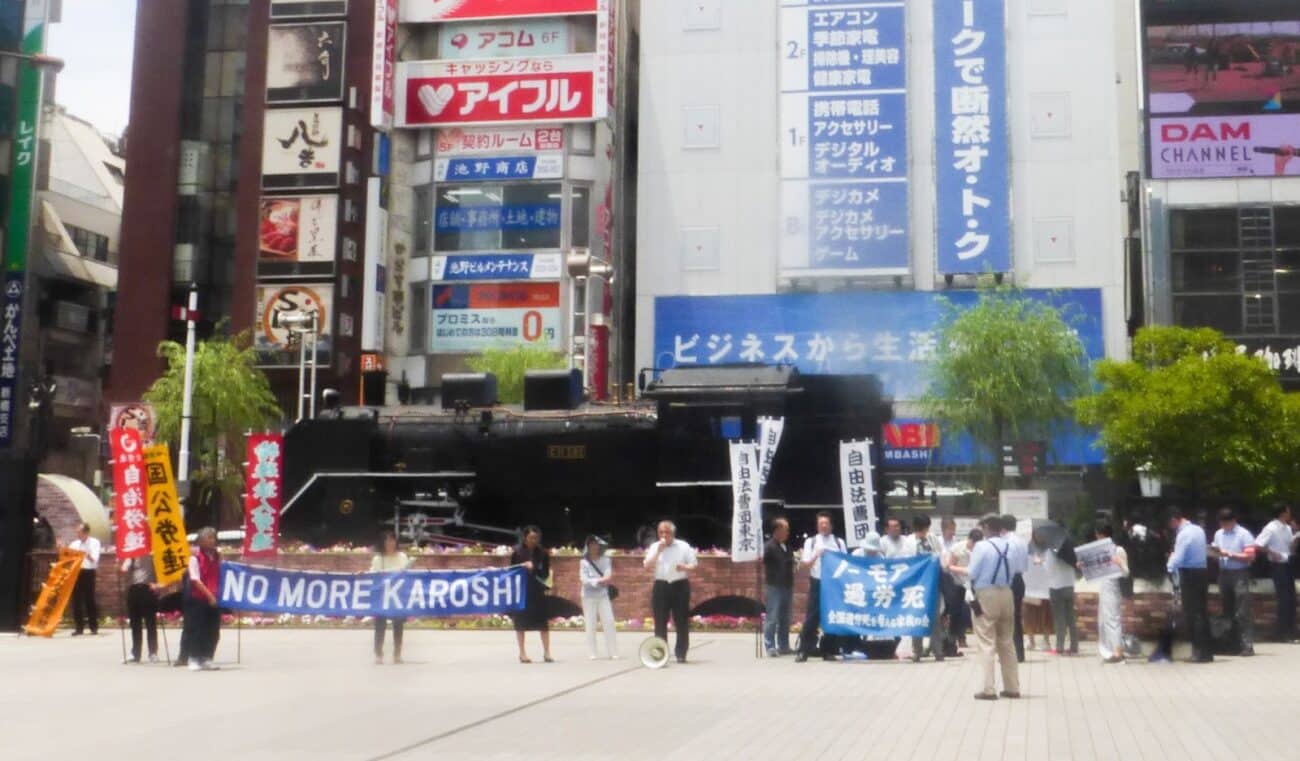
But Japan has so much to offer, it seems that just as common as people wonder “how can I move to Japan,” people ask how it is possible to do so without joining traditional Japanese work environments.
It is definitely possible to move to Japan without pursuing a traditional career path. Here are some ways how.
One of the best ways to find an inclusive workplace is to find international companies with Japanese satellite offices or divisions.
This opens the door to a variety of industry types including IT, financial, goods, professional services and more. Many of these companies offer English-speaking workplaces, and some offer partial or fully-remote positions. Companies may or may not provide assistance to obtain a remote work visa, freelance visa, or digital nomad visa. Typically speaking, it’s still easier to get one of these jobs when applying from inside Japan. (Don’t forget we’re happy to help plan your visa strategy!)
While this may be a strategic direction to find a more comfortable work culture fit, it is worth mentioning that landing a job at companies like these can be highly competitive. And even if they are an international company, they still may have high-stress and high-formality work environments. It’s a good idea to do extensive research before engaging in recruiting activities.
In addition, each organization will have their own rules around visa sponsorships, transfers, and hiring from overseas. There will be many factors at play, so note that even if you can join one of these companies, it does not mean you can join their office in Japan.
There are also a lot of foreign-owned small businesses in Japan! Japan is a destination for many people seeking to build lifestyle businesses – businesses that provide the essentials to survive financially, but also provide a lot of flexibility for work hours, location, etc. As these kinds of businesses tend to be a bit more under the radar, you will likely need to find them through networking in person and on LinkedIn.
If you are looking for a fully remote position, Japan-based offices are not your only option. There are some companies that offer 100% remote positions that allow you to work from anywhere in the world.
Note, however, that an internationally-based remote position does not grant Japan residency privileges. But we are happy to brainstorm workarounds with you! Feel free to talk to us!
Hi! Are you planning your move to Japan? It’s stressful and confusing!
That’s why we made Japan Remotely Academy.
It’s years of hard-learned lessons, condensed into an easy-to-follow library of resources: how to get better jobs, find the best places to live, find foreigner-friendly housing and employment, and more! So you can move to Japan the best way for you (and the best way for Japan!) the first time around!
One of the best ways to work in Japan on your own terms is through an arrangement with an Employer of Record (an EOR). There are two primary scenarios where this is advantageous: work remotely for an existing employer or work remotely for yourself.
The preparations will vary depending on who is the decision-maker at the main organization. But generally speaking, that organization then works with the EOR to formally hire the prospective resident. The EOR charges a fee to the main organization, but then manages salary, national healthcare, pension, and other formalities for the prospective resident.
Sound difficult? It’s actually a very flexible way to forge your own employment in Japan, as long as the costs are manageable. And you don’t have to figure out complicated pension, taxes, etc. on your own.
There are different types of EOR services available in Japan. Japan Remotely offers EOR matching assistance, so don’t hesitate to reach out for a no-obligation call.
Franchise opportunities include restaurants, convenience stores, eikaiwa (English school storefront), gyms, retail, parking lots, group and senior homes, and more.
In this scenario, systems and operation manuals are already in place. Due to this, franchise investors can have the opportunity to step into an operational (or nearly operational) business system.
This can reduce guesswork for those interested in owning a profitable business in Japan, and can also provide a means for the business manager visa and therefore, a track to permanent residency status.
For those willing to operate within the guidelines of an existing organization, assuming ownership of a franchise can be a great potential option for work.
Buying into a small mom-and-pop-style shop could take an initial investment of 2 to 4 million yen but buying into a franchise will typically be a bit of a larger investment, starting at 6 million yen capital, plus 8 to 12 million in start-up capital. Initial runway time would also be needed for a newly opening business to operate without profit.
Operating as the owner of a franchise operation will require sensitivities towards the Japanese crew running the business and relationships with the franchise owner. But they are still good career opportunities in Japan for less-experienced business owners, those looking to learn the ropes in the associated industry, and those who may be interested in operating the business remotely.
Freelancers, self-employed, and independents have the opportunity to work in Japan if an appropriate strategy is in place ahead of time. This will vary greatly based on the type of work being done. But artists, writers, and others can move their work to Japan, provided they have a legitimate reason to come to Japan as an artist.
If visa sponsorship is not provided by an employer, you will need to make a case that you can support yourself. If you are a freelancer, this would usually mean having a signed contract from a Japanese company, and securing a good monthly income for the near future.
The strongest applications for independents will have a thorough and well-rounded set of supporting evidence. This may include the history of industry experience on one’s resume, secured client contracts, available capital, purchase orders from Japanese companies, awards, media publications, recommendation letters from reputable Japan-based professionals or organizations, and an explanation as to why it is important to be located in Japan. It will help the business case to have one or more major contracts from Japan-based companies if possible. Evidence of income stability is crucial.
Arts Council Tokyo offers a variety of art grants including for traditional arts, non-profit creative work, art startups, regional development, local projects, and more. Our partner, Small Seasons Immigration Office, has expertise in grant application services for artists and creatives.
A great way to work with freedom is to run your own business in Japan. While the terms are a bit restrictive (both financially and commitment-wise), a great way to start is with a start-up visa. From there, the next step on the track is to apply for a business manager visa, and ensuring that all of the requirements are met.
Many of our clients are already business owners, sole proprietors, or freelancers. Depending on the type of work you do, it may be possible to expand your services to fit the Japanese market rather than starting from scratch.
For those who already have a viable business model, starting a business in Japan may be a useful path for a visa and permanent residency.
Expats have successfully started many types of businesses.

Not everyone can get a job at Google Japan, but not all great jobs are posted online. Some of the best jobs are hidden in small-to-medium-sized businesses and must be discovered through networking.
I’ve encountered people with interesting jobs in sake breweries, music recording, professional lighting, dog food makers, commercials and modeling, medical device technology, high-performance computing, and more. If you ask around to friends, family, former colleagues and tell them about what you are interested in, a great opportunity might reveal itself.
For example, I was dog-sitting for a friend in Tokyo and got into a conversation with a complete stranger about the dog. We met together a few times for drinks and became friends. I didn’t know what he did exactly, but when I expressed interest and asked for an informational interview he offered me a job on the spot. We were a two-man-team and it was a lot of fun!
And one of the team members here at Japan Remotely regularly meets interesting professionals using the language exchange app, Hello Talk. The great thing about that is you can start fostering relationships with Japanese professionals from anywhere in the world. But as per Japanese culture, the strongest relationships are reinforced by meeting up in person.
If you are currently outside Japan, it can be hard to replicate that kind of meaningful in-person connection. However, there are many Japan-related professional online communities you can get involved in. A new one called “Happy Mondays” is just starting up. It’s run by Gary Bremermann, who has been a recruiter and bilingual career coach in Japan for over 20 years and is known to be a great connector.
Working in Japan outside of conventional Japanese corporate culture is not only possible, but is available through a wide variety of customizable paths.
From foreign-based companies to franchisee opportunities or starting your own business, there are opportunities to both take your work to Japan, or start something new.
With the appropriate planning and right resources in place, you can independently create a fulfilling professional life while taking advantage of all that Japan-living has to offer.
The Japanese government is taking initiatives to increase support to FinTech and green business, so with time, it should follow that career opportunities in Japan for these fields will also increase.
English teaching is an ever-present opportunity. While some positions may be more desirable than others, it’s safe to say that English teaching is here to stay. And since many foreign teachers stay only temporarily, there is a revolving door for position openings.
Along with the increasing population in the 60+ age range (sometimes called the silver market), there are some associated market trends and accompanying workplace demand. Tokyo-based recruiter of 20+ years, Gary Bremermann, adds:
I believe there are a lot of niche opportunities in health & wellness businesses driven by an increase in the number of non-Japanese residents who look for services in English as well as an aging Japanese society where people want to stay healthy and in shape and would enjoy services offered in an ‘international environment’, though local staff may be delivering services in Japanese. This would include healthy food and beverage options, fitness programs (especially for seniors), outdoor activities, etc.
The rate of foreigners with Japanese residency is anticipated to increase. Simultaneously, services that cater to Western audiences are expected to surge in demand.
We are already seeing services such as bilingual real estate, tax services, and globalization/localization services surge in their bookings.
But many of these opportunities are best served by those who have the ability to communicate seamlessly in Japanese. So study up!
Don’t write off teaching English as a useful first step! Many people consider it a rite of passage, and many established foreign professionals in Japan indeed started as English Teachers.
There are many benefits to teaching English, especially if you have the patience and resume to land a position with the JET program. While many people may think “but I don’t want to be an English Teacher!” the truth is that the position provides moving assistance, organizes your first visa, and starts you off with a stable paycheck.
Some find that there is a high amount of downtime. This is the perfect opportunity for Japanese language practice, job seeking, or simply as a low-obligation way to transition to your new home abroad.
Even for those who only stick with the role for one or two years, it can be a great way to “get your foot in the door” (of Japan). More networking opportunities are available to people who already live in the country.
This really depends on you and what you like! To some people, teaching English to little kids might be super fun! To others, it’s their last choice. There are all of the standard “fun job” options such as creative roles. But there are a lot of job ideas such as sake brewing, maid cafes, gaming companies, writing for English news outlets, Japanese specialty museums such as ukiyo-e, Japan tourism, content creation, and other alternative careers that are unique to Japan. Could be a lot of fun for a Japanophile, as long as the visa is available!
Need a sounding board to help with your Japan immigration strategy? We’ve got your back!
👋 Hi! I’m Nick, an experienced Immigration and Moving Consultant at Japan Remotely. We help navigate visa types, Japan real estate, location scouting, career opportunities in Japan, business strategy, and more. We help you create a realistic Action Plan and Visa Strategy, so you can find your fastest track to permanent residency and the lifestyle you’ve been dreaming of.
Interested to learn more? Talk to us! We are happy to discuss a custom strategy.

23 February, 2026


© 2026 Japan Remotely, All Rights Reserved.
810-0044 福岡市中央区六本松四丁目3番11号
ビジネス・ワン六本松319号室